Tinnitus is a common condition that affects millions of people worldwide. It is often described as hearing sounds such as ringing, buzzing, humming, clicking, or whistling when no external sound is present. For some individuals, tinnitus may be temporary, while for others, it can become a long-lasting concern that affects concentration, relaxation, and sleep quality.
Recently, the “10-second Vicks trick for tinnitus” has gained attention online as a simple home remedy that claims to quickly reduce ringing sensations. Many people searching for natural tinnitus support have come across videos and articles suggesting that applying Vicks VapoRub or using it around specific areas may provide relief.
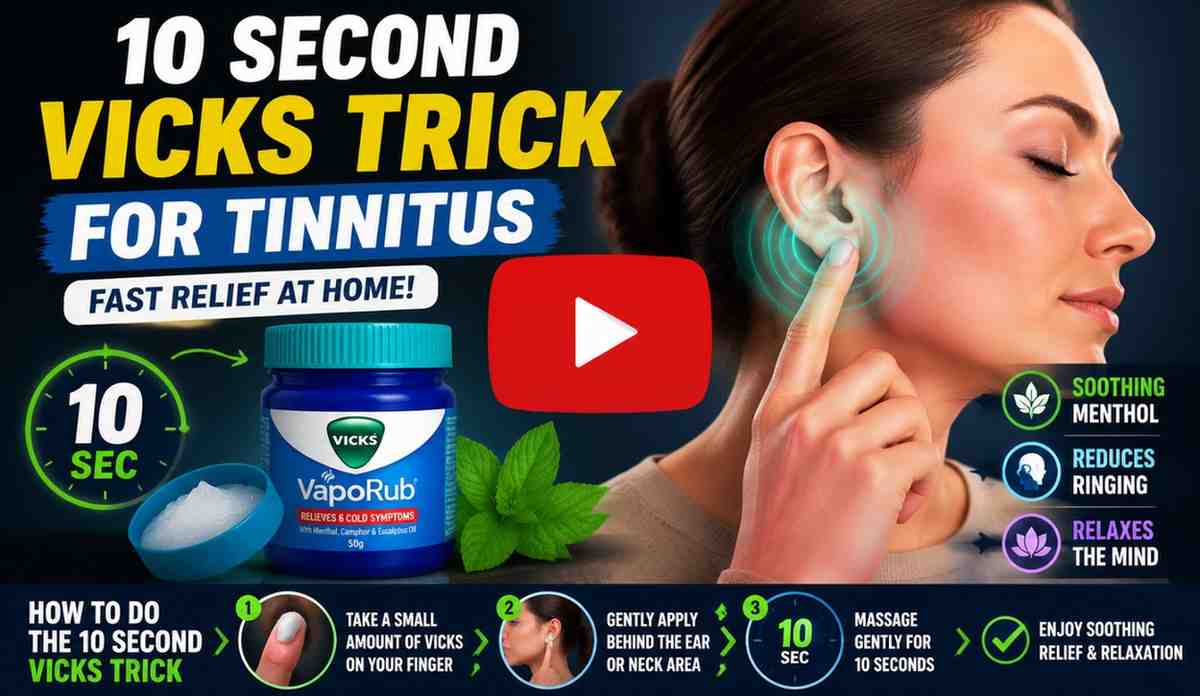

The 10-second Vicks trick for tinnitus is a viral home remedy claim. There is no strong scientific proof it can treat tinnitus, but some find comfort from soothing routines.
However, it is important to separate internet trends from scientifically supported approaches. While some people report feeling temporary comfort from soothing sensations, there is currently no reliable scientific evidence proving that Vicks can eliminate tinnitus or repair the underlying causes of hearing-related changes.
The 10-second Vicks trick is a popular online remedy, not a medically proven treatment for tinnitus.
This article explores what the 10-second Vicks trick means, why people try it, what science says about tinnitus, possible reasons someone may feel temporary relief, safer approaches for managing symptoms, and when professional evaluation may be needed.
What Is the 10 Second Vicks Trick for Tinnitus?
The 10-second Vicks trick for tinnitus refers to an online wellness technique involving the use of Vicks VapoRub, a topical menthol-based product, as a quick method for easing tinnitus symptoms.
The trend usually involves applying a small amount of the product near certain areas around the ear, neck, or temples with the belief that cooling sensations from menthol may distract the brain from tinnitus sounds.
Supporters of the trick often claim that the cooling feeling creates a sensory response that temporarily reduces awareness of ringing or buzzing. However, these reports are based mostly on personal experiences rather than controlled scientific studies.
Tinnitus is not caused by something simple that can usually be “switched off” in seconds. It involves complex interactions between the auditory system, nerves, and the brain’s interpretation of sound signals.
Tinnitus is a neurological and auditory experience, not simply an ear problem. Because tinnitus can have many possible causes, a single topical product is unlikely to address all the factors involved.
Understanding Tinnitus: Why Does Ringing Happen?
To understand why remedies like the Vicks trick are discussed, it helps to understand how tinnitus develops.
The hearing system includes the outer ear, middle ear, inner ear, auditory nerve, and areas of the brain responsible for processing sound. When changes occur anywhere along this pathway, the brain may begin interpreting signals as sound even when no external noise exists.
Common factors associated with tinnitus include:
Hearing Changes
Age-related hearing changes or exposure to loud sounds can affect the delicate structures involved in hearing. When sensory cells are damaged, the brain may attempt to compensate for the loss of auditory information, sometimes creating phantom sounds.
Earwax Blockage
Excess earwax can interfere with normal hearing and may contribute to temporary ringing sensations.
Stress and Sleep Disruption
Stress does not always cause tinnitus, but it can influence how strongly a person notices symptoms. Increased stress levels may make tinnitus feel louder or more difficult to ignore.
Medication Effects
Some medications may contribute to tinnitus symptoms in certain individuals. Anyone concerned about medication-related tinnitus should discuss it with a healthcare professional.
Jaw and Neck Factors
Issues involving the jaw joint, muscles, or neck tension may influence tinnitus perception in some people.
Why Do People Try the Vicks Trick for Tinnitus?
Many people search for quick solutions because tinnitus can be frustrating, especially when symptoms interfere with daily activities.
The popularity of the 10-second Vicks trick may be connected to several factors:
Cooling Sensation
Menthol creates a cooling sensation when applied to the skin. This sensory effect may temporarily draw attention away from uncomfortable sensations.
Relaxation Response
The smell and feeling of menthol products may create a calming experience for some individuals, especially before sleep.
Distraction Effect
The brain constantly processes multiple sensory signals. A new sensation, such as cooling or fragrance, may temporarily shift attention away from tinnitus awareness.
Temporary distraction is different from treating the underlying cause. A person may feel better for a short time without the tinnitus itself being changed.
Does the 10 Second Vicks Trick Actually Work?
Currently, there is no strong scientific evidence showing that Vicks VapoRub can cure tinnitus, reduce hearing-related damage, or permanently stop ringing sounds.
Some people may report improvement because:
- The cooling sensation creates temporary distraction.
- The routine promotes relaxation.
- The person becomes less focused on the tinnitus sound.
- Stress levels decrease temporarily.
These effects may influence tinnitus perception, but they do not necessarily change the source of the condition.
Tinnitus management often focuses on reducing how noticeable the sound is rather than completely eliminating it.
The Science Behind Tinnitus Management
Modern tinnitus research focuses on how the brain processes sound signals and how individuals adapt to persistent auditory sensations. Several evidence-based approaches aim to reduce the impact of tinnitus.
Sound Therapy
Sound therapy uses external sounds, such as white noise, natural sounds, or calming audio, to reduce the perceived contrast between tinnitus and silence. This may help the brain gradually pay less attention to tinnitus signals.
Cognitive Behavioral Therapy (CBT)
CBT-based approaches help people change emotional reactions and stress responses related to tinnitus. Research suggests that reducing anxiety and frustration may improve quality of life for people with chronic tinnitus.
Hearing Support
For individuals with hearing loss, hearing devices may help improve awareness of external sounds and reduce tinnitus perception.
Relaxation Techniques
Breathing exercises, meditation, and stress reduction methods may help some people manage tinnitus-related discomfort.
Can Menthol Help With Tinnitus?
Menthol is commonly used in products designed to create cooling sensations. It interacts with sensory receptors in the skin that respond to temperature changes.
This cooling effect may feel soothing, but it does not directly target the auditory pathways responsible for tinnitus.
The sensation may act as a temporary sensory distraction.
For example, when people experience multiple sensations simultaneously, the brain may focus more strongly on one signal than on another. This is one reason some individuals may feel temporary relief.
However:
A soothing sensation does not mean the source of the tinnitus has been corrected.
Potential Risks of Using Vicks Near the Ear
Although Vicks VapoRub is widely available, it is not designed as an ear treatment.
Using it incorrectly may cause problems.
Potential concerns include:
- Skin irritation
- Allergic reactions
- Eye irritation if applied too close
- Discomfort from strong vapors
- Problems if placed inside the ear canal
The product should not be inserted into the ear unless specifically directed by a healthcare professional.
The ear canal contains sensitive structures that can be easily irritated.

Safer Ways to Support Tinnitus Relief
While there is no universal cure for tinnitus, several strategies may help reduce discomfort.
Protect Hearing
Avoiding excessive exposure to loud noise can help prevent additional hearing stress. Use appropriate hearing protection during loud activities.
Improve Sleep Habits
Poor sleep can make tinnitus feel more noticeable. Creating a relaxing nighttime routine and using background sounds may improve sleep comfort.
Manage Stress
Stress management may reduce the emotional impact of tinnitus. Activities such as gentle exercise, meditation, and relaxation techniques may be helpful.
Stay Physically Active
Regular movement supports overall wellness and may improve stress regulation.
Reduce Excess Stimulation
Some people notice changes in tinnitus with caffeine, alcohol, or certain foods. Tracking personal triggers can help identify patterns.
Natural Remedies People Explore for Tinnitus
Many individuals look for natural tinnitus solutions. Common approaches include:
- Herbal supplements
- Relaxation practices
- Dietary adjustments
- Sound-based techniques
- Massage or stretching routines
However, natural does not always mean scientifically proven.
It is important to evaluate whether a method has research support and whether it is safe for individual circumstances.
When Should You See a Doctor About Tinnitus?
Most occasional ringing sounds are not serious, but some situations require medical attention.
Seek professional advice if tinnitus:
- Appears suddenly
- Occurs only in one ear
- Happens with hearing loss
- Is accompanied by dizziness
- Follows a head injury
- Becomes severe or disruptive
A healthcare provider may evaluate hearing, review medical history, and identify possible causes.
Common Myths About the 10 Second Vicks Trick
Myth 1: Vicks Can Cure Tinnitus
There is no evidence that Vicks permanently eliminates tinnitus. It may provide temporary comfort for some people but does not treat the underlying cause.
Myth 2: Tinnitus Is Always Caused by Ear Problems
Tinnitus involves communication between the ears and brain. The nervous system plays an important role in how sounds are created and perceived.
Myth 3: Quick Tricks Work for Everyone
Tinnitus varies significantly between individuals. A technique that feels helpful for one person may not affect another person’s symptoms.
Final Thoughts
The 10-second Vicks trick for tinnitus has become popular because it offers a simple and fast approach that many people hope will provide relief. The cooling sensation and calming routine may help some individuals temporarily shift attention away from ringing sounds.
However, there is currently no scientific evidence that Vicks can cure tinnitus or address its underlying causes.
The best tinnitus strategies focus on understanding the cause, protecting hearing, managing stress, and using evidence-based approaches.
For those who enjoy the calming sensation of menthol products, using them safely may be part of a personal relaxation routine. However, anyone experiencing persistent or concerning tinnitus should seek guidance from a qualified healthcare professional.
References
.