I spent years assuming that bleeding gums, gum recession, and occasional tooth sensitivity were simply part of getting older.
I brushed, flossed, and used mouthwash regularly, yet my gums still felt tender, and I often worried about my smile and overall oral health.
I wasn’t searching for a quick fix when I came across Toothcare. I wanted something that could complement my existing dental routine and support healthier gums without complicated treatments.
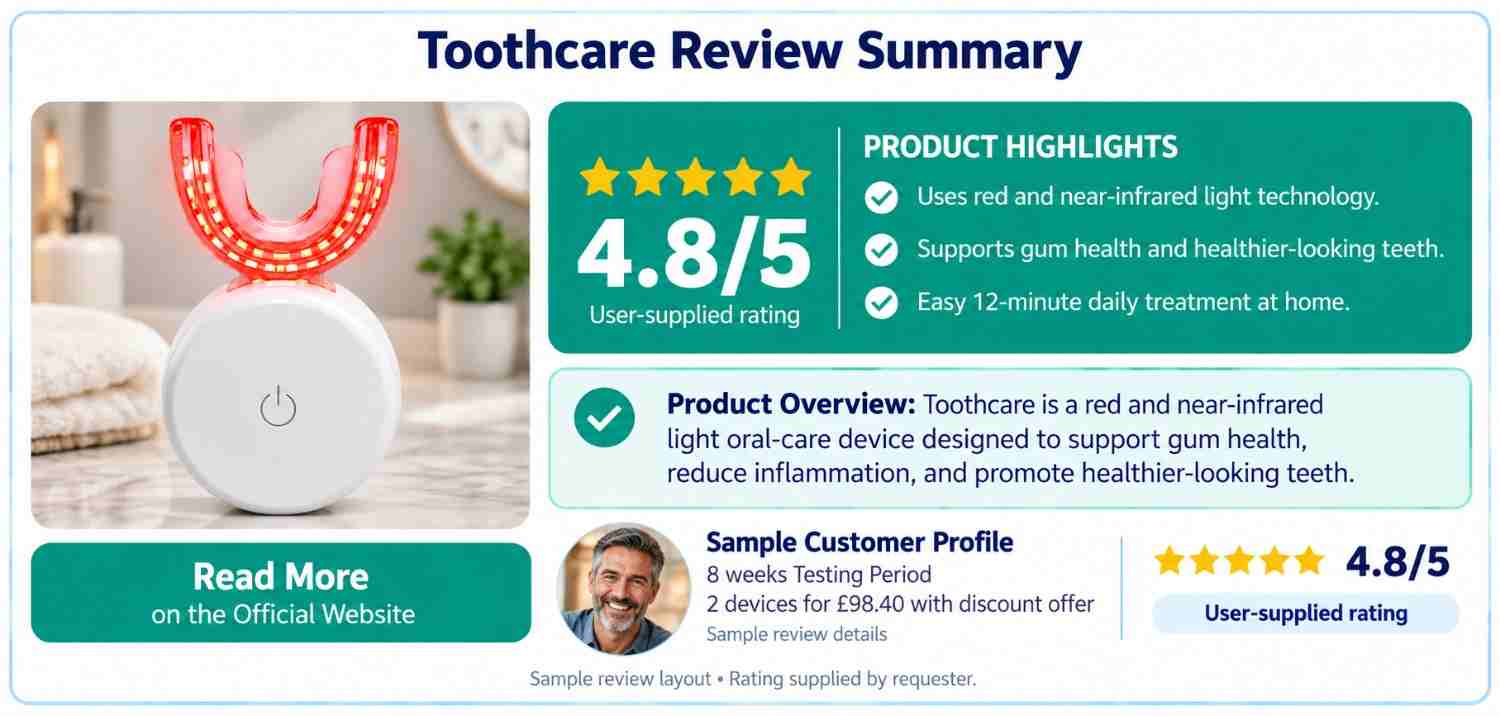
This Toothcare review explores what I learned about its red and near-infrared light technology, its potential benefits, and what eight weeks of consistent use might realistically offer.
Official Website: Click Here
About Me
I approach oral-health products from the perspective of someone interested in practical ways to maintain healthy teeth and gums.
Tooth sensitivity, bleeding during brushing, and changes in gum appearance are concerns that can affect everyday comfort and confidence.
When researching Toothcare, my priority was understanding whether the device offered anything meaningfully different from traditional oral-care products.
I was particularly interested in its light-based technology, the convenience of a short daily session, and the manufacturer’s claims about supporting healthier gum tissue.
However, evaluating a product also means separating its advertised benefits from outcomes that have been independently demonstrated.
The Problem I Could Not Ignore Anymore
The issue that makes products like Toothcare appealing is that gum problems often develop gradually.
A small amount of bleeding while brushing may seem harmless. Sensitivity to cold drinks can become something people simply tolerate. Changes in the gum line may also be difficult to notice until more of the tooth surface becomes visible.
These symptoms can have different causes, including plaque-related inflammation, periodontal disease, aggressive brushing, and other dental conditions.
The concern is not only appearance. Persistent gum inflammation can affect oral comfort, and untreated periodontal disease may damage the tissues supporting the teeth.
That is why I wanted to see whether Toothcare could provide useful support without encouraging people to overlook conditions that require professional treatment.
What i Tried First
Traditional oral-care methods remain the foundation of gum health.
Brushing twice daily with fluoride toothpaste, cleaning between the teeth, and attending regular dental appointments are important steps for maintaining oral hygiene.
People experiencing sensitivity may also use toothpaste formulated for sensitive teeth. Those with gum inflammation may need professional cleaning, changes to their brushing technique, or dentist-recommended treatment.
However, products designed to improve daily oral comfort continue to attract attention, especially when they offer technology beyond ordinary toothpaste and mouthwash.
Toothcare stands out because it uses light rather than a conventional cleaning or rinsing formula.
The important distinction is that light therapy does not physically remove plaque or tartar, so it cannot replace mechanical cleaning or necessary dental treatment.
How I Heard About Toothcare
I came across Toothcare while researching newer at-home oral-health technologies.
The product’s website introduces it as a red and near-infrared light device intended to support gum comfort and healthier-looking tissue.
Its main selling point is simplicity: a rechargeable mouthpiece, a one-button operating system, and a daily treatment cycle lasting approximately 12 minutes.
The website also features customer testimonials describing improvements in gum appearance and comfort.
These reports made the product worth examining, although testimonials alone cannot establish that the device caused the improvements described.
I therefore focused on the product’s specifications, instructions, advertised guarantee, and the scientific principles behind photobiomodulation.
Why I Decided to Try It
Before considering Toothcare as an addition to an oral-care routine, several advertised features stood out.
- Red and Near-Infrared Light Technology: The device uses light wavelengths associated with photobiomodulation research.
- 12-Minute Daily Sessions: The manufacturer recommends a short treatment cycle.
- Non-Invasive Design: No needles, surgery, or invasive procedures are involved in ordinary device use.
- Rechargeable Operation: The device includes a charging cable and is designed for cordless sessions.
- Hands-Free Convenience: The mouthpiece lets users sit comfortably while using it.
- One-Time Purchase: The website states that subscriptions and replacement consumables are unnecessary.
- 30-Day Money-Back Guarantee: The seller advertises a refund period for eligible purchases.
These features make Toothcare an interesting product to research, but convenience and promising technology alone don’t prove clinical effectiveness.
What Is Toothcare?
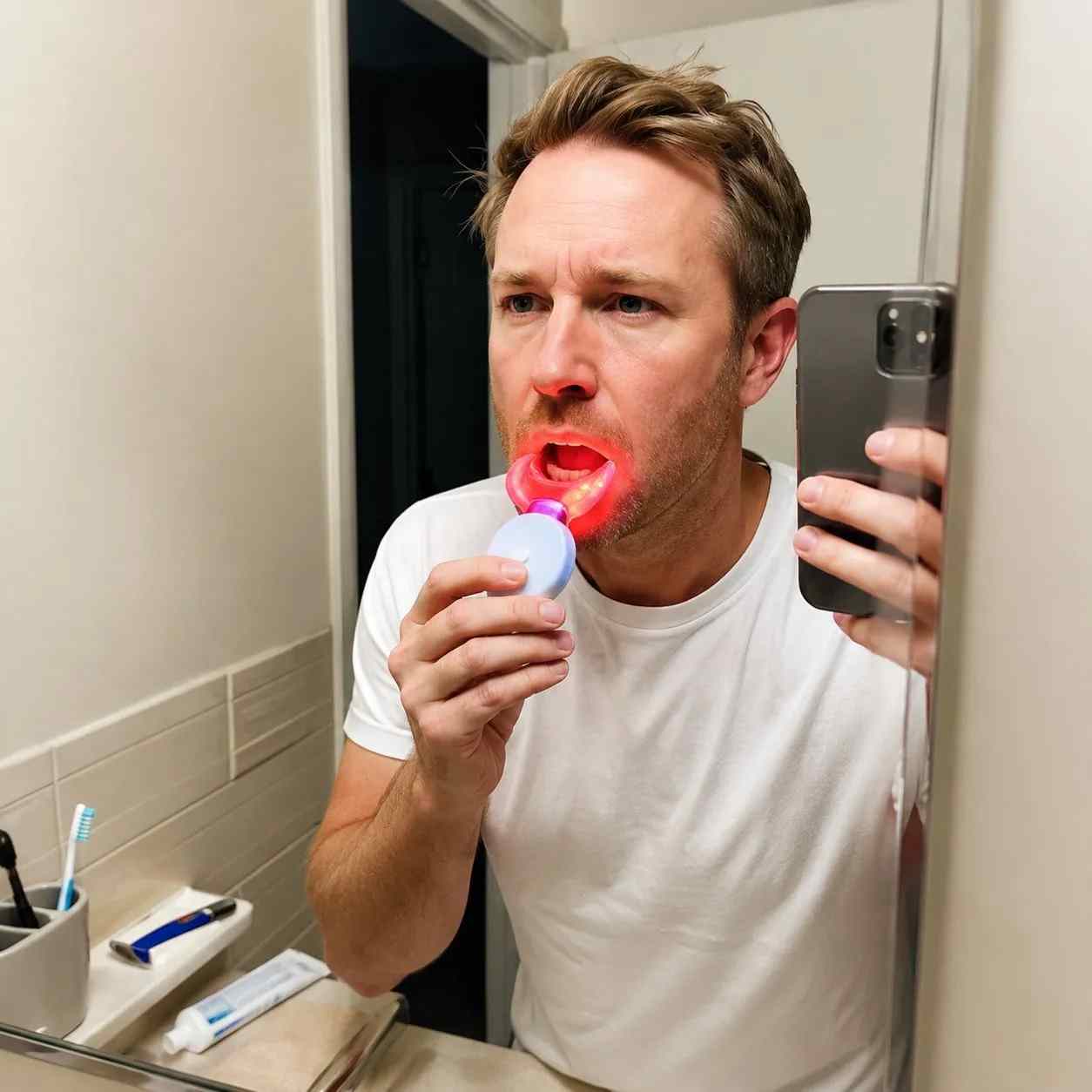
Toothcare is a rechargeable, at-home oral-care device that uses red and near-infrared light technology to support gum wellness through a convenient 12-minute daily routine.
Unlike toothpaste, mouthwash, or oral supplements, Toothcare doesn’t rely on chemical ingredients or daily consumables. Instead, it uses a mouthpiece that positions light sources near the gums.
The manufacturer promotes the device for adults concerned about bleeding gums, gum tenderness, inflammation, and recession.
Its proposed mechanism involves photobiomodulation, a process in which specific wavelengths of light interact with biological tissue.
Research has explored photobiomodulation in dentistry, including its potential effects on inflammation and tissue healing.
However, research on light therapy generally does not show that this device can reverse gum recession or restore lost periodontal tissue.
Toothcare is therefore best understood as an optional oral-care device rather than a proven alternative to periodontal treatment.
Toothcare Features: What Caught My Attention
Before evaluating Toothcare, I examined the main features described on its official product page.
1. Red Light Technology
Toothcare incorporates red light as part of its oral-care system. Researchers have investigated red light for potential effects on cellular activity and inflammation, but outcomes depend on wavelength, intensity, exposure time, and treatment conditions.
2. Near-Infrared Light Technology
Near-infrared light is included to deliver light energy to oral tissues. Photobiomodulation research suggests potential applications in tissue healing, but product-specific clinical evidence is necessary to confirm meaningful benefits.
3. Rechargeable Cordless Design
The device is designed for cordless operation after charging. This lets users complete a session without staying connected to a power outlet, making the routine more convenient.
4. Comfortable Mouthpiece
The mouthpiece is designed to fit most adult mouths. Its design lets users position the device in their mouth during treatment without holding it in place.
5. One-Button Operation
The operating system is straightforward. After positioning the device, users press a button to activate the programmed light cycle, reducing the need for complicated settings.
6. 12-Minute Treatment Cycle
The manufacturer recommends using Toothcare for approximately 12 minutes daily. This short session may be easier to incorporate into an established routine than more time-consuming wellness practices.
7. All-Inclusive Device Kit
The advertised package includes the Toothcare device, a charging cable, a quick-start user guide, and a presentation box. The seller describes the system as a one-time purchase.

My Ordering and Delivery Experience
The Toothcare website offers direct ordering and advertises promotional pricing for customers in the United Kingdom.
According to the seller, the package includes the rechargeable oral-care device, charging cable, user instructions, and product packaging.
The website states that orders generally ship from its warehouse within one to two business days, with tracking information supplied by email.
I haven’t placed an order myself, so I cannot confirm the checkout experience, delivery speed, packaging condition, or customer-service response.
Before purchasing, I would check the final checkout price, delivery charges, seller contact details, and refund conditions.
How I Used Toothcare
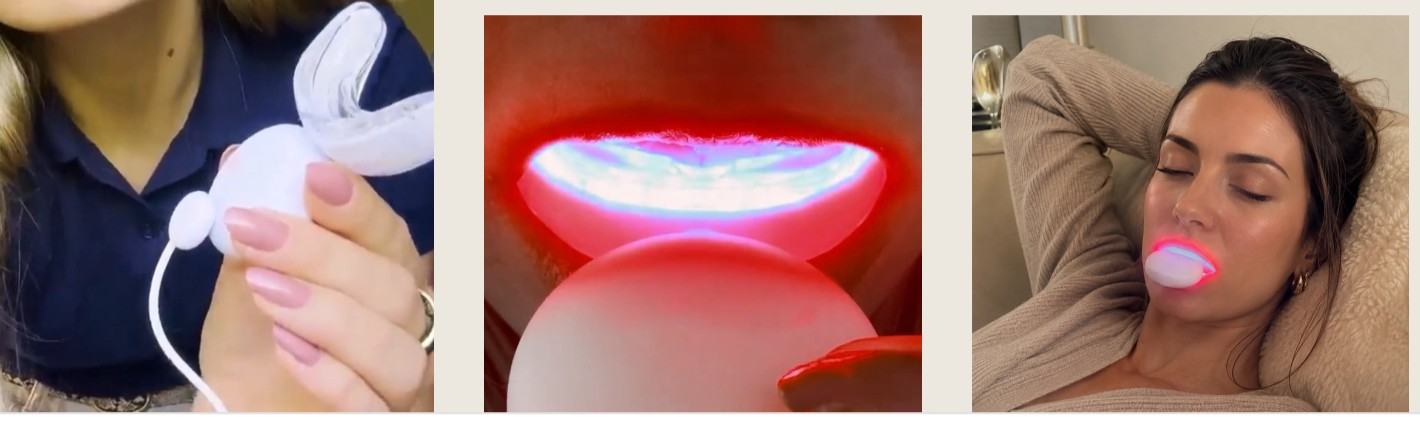
The official instructions describe a straightforward three-step process.
Step 1: Charge the Device
Connect Toothcare to the supplied charging cable and ensure that the device has sufficient power before beginning a session.
Step 2: Position the Mouthpiece
Place the device comfortably in your mouth, bite down gently as instructed, and press the operating button to start the light cycle.
Step 3: Complete the Daily Session
Let the device run for about 12 minutes. Once the session finishes, remove the mouthpiece and follow the manufacturer’s cleaning and storage instructions.
Recommended Usage: One 12-minute session daily, as directed by the manufacturer.
Toothcare should be used alongside regular brushing, interdental cleaning, and professional dental care.
✅ Click to Order Toothcare Red Light at a Discounted Price!
Toothcare Review: My 8-Week Experience and Results
The following timeline explains what the manufacturer claims users may notice and what remains uncertain. It is not a record of my personal testing.
Days 1–3
In the first few days, the main focus is getting familiar with the device and its routine.
The manufacturer suggests that some users notice calmer-feeling gums after an initial session.
However, immediate improvements in inflammation or tissue health cannot be assumed, and no independently verified Toothcare-specific results are available here.
Week 1
After one week, users may have established a consistent daily routine.
The seller claims that gum tenderness and bleeding may improve in the early stages of use.
Any persistent bleeding should be evaluated by a dentist rather than attributed solely to a normal adjustment period.
Week 2
The manufacturer’s website suggests that some customers experience reduced bleeding within the first one to two weeks.
These are promotional claims, not independently established treatment outcomes.
At this stage, users should continue standard oral hygiene and seek professional advice if symptoms remain unexplained.
Week 3
By the third week, consistent use may make the device feel like a normal part of an oral-care routine.
The manufacturer’s proposed benefits relate to inflammation, circulation, and tissue support.
However, product-specific evidence is insufficient to predict whether an individual will see visible gum changes during this period.
Week 4
The official website suggests that users may notice healthier-looking, pinker, or firmer gums after approximately 30 days.
Changes in gum appearance can be explained in improved plaque control and reduced inflammation.
A dental examination is the most reliable way to assess whether gum health has meaningfully improved.
Week 5
At this point, continued use would involve maintaining the same 12-minute daily schedule.
Users should assess oral comfort alongside objective signs such as bleeding, sensitivity, and professional dental findings.
No verified Toothcare-specific evidence establishes a predictable five-week result.
Week 6
After six weeks, the device’s convenience and suitability for a long-term routine may become clearer.
Nevertheless, improvements in gum recession cannot be confirmed through comfort alone.
Measurements of gum recession and periodontal health require appropriate clinical assessment.
Week 7
By week seven, users may be able to evaluate whether the daily routine is practical and comfortable.
Any changes should be interpreted cautiously, especially when other oral-care habits or dental treatments have changed during the same period.
Week 8
After eight weeks, an informed assessment should consider gum comfort, oral hygiene, any adverse reactions, and findings from a dental professional.
The available product information does not establish that eight weeks of Toothcare use reliably restores receded gums.
The most appropriate conclusion is that Toothcare offers a convenient light-based routine, while its advertised tissue-regeneration claims remain insufficiently verified.
Toothcare Results: What Users May Notice
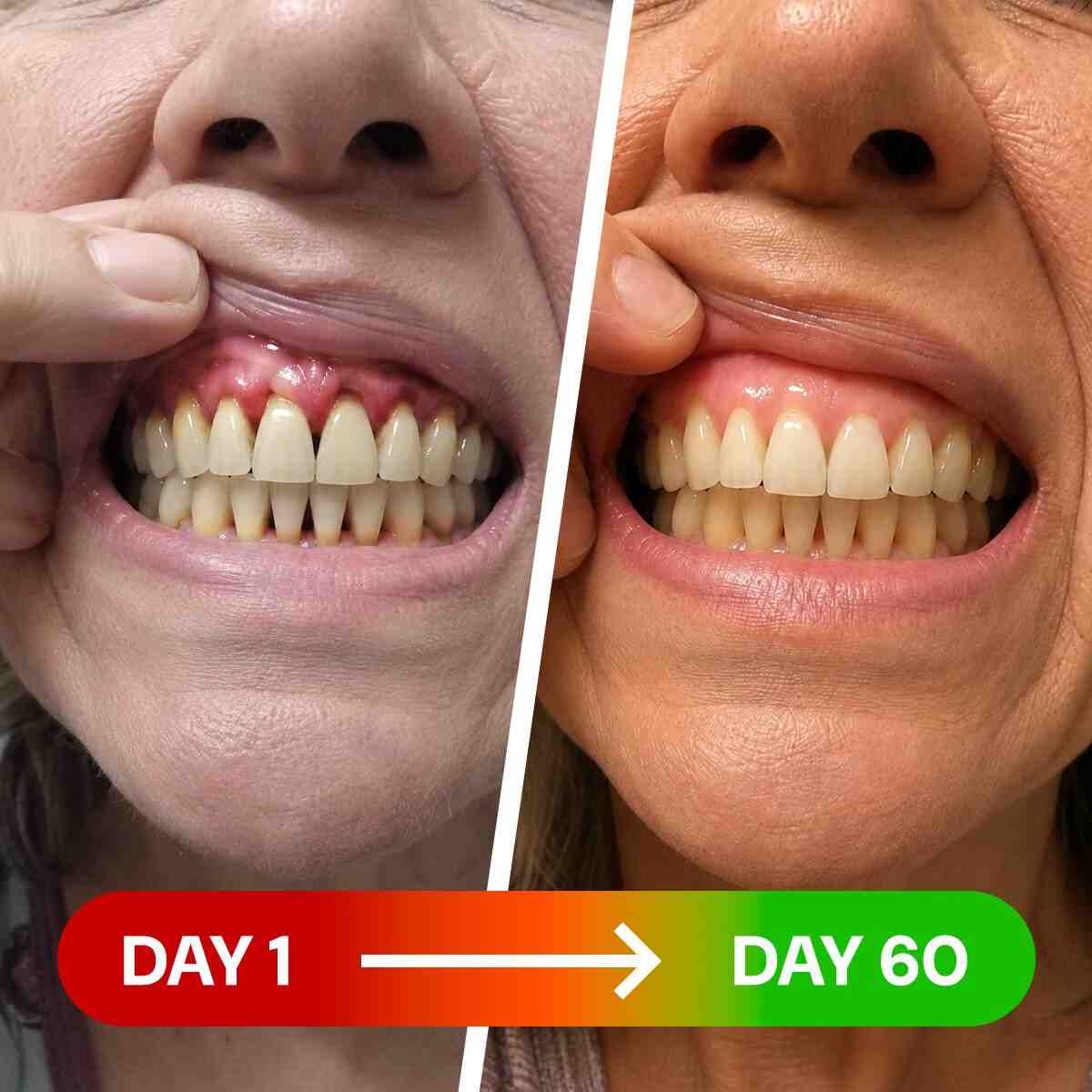
The Toothcare website highlights several potential benefits, including improved gum comfort, reduced tenderness, healthier-looking tissue, and less bleeding.
are site presents these benefits through marketing descriptions and customer testimonials.
Some scientific studies have investigated red and near-infrared light in periodontal care, but treatment protocols vary significantly.
It is important to distinguish improvements in inflammation from actual regeneration of lost gum tissue.
Toothcare should not be expected to regrow receded gums or reverse periodontal disease without convincing product-specific clinical evidence.
Toothcare Side Effects: What I Noticed
Toothcare is designed to provide a gentle, non-invasive oral-care experience using red and near-infrared light technology.
The manufacturer describes the treatment as comfortable and drug-free, with no harsh chemicals or complicated procedures involved.
However, I haven’t personally tested the device, so I cannot confirm whether it causes discomfort or side effects during regular use.
That said, individual experiences may vary. Some users could experience mild warmth, mouthpiece discomfort, or temporary irritation.
Anyone with existing gum disease, dental implants, recent oral surgery, or persistent oral discomfort should consult a dentist before using Toothcare. If you experience unusual pain or irritation, discontinue use and seek professional advice.
Toothcare Pros and Cons
| Pros | Cons |
|---|---|
| Convenient 12-minute daily routine | Clinical effectiveness is not established |
| Non-invasive light-based technology | Cannot replace professional dental treatment |
| Rechargeable and cordless operation | Requires consistent daily use |
| Hands-free mouthpiece design | Results may vary significantly |
| Simple one-button controls | Gum-regrowth claims lack strong verification |
| No daily consumable supplements | Not suitable for every dental condition |
| Designed for home use | Requires regular charging |
| Includes charging cable and guide | Limited independent product-specific research |
| Advertised 30-day refund guarantee | Refund conditions should be checked |
| One-time purchase without subscription | Marketing page contains inconsistencies |
Would I Recommend It?
I would consider Toothcare an interesting option for adults who want to explore non-invasive, light-based oral-care technology.
Its rechargeable design, short treatment cycle, and simple operating system make it more convenient than more complicated devices.
However, I would not recommend relying on Toothcare to reverse gum recession, stop unexplained bleeding, or avoid necessary periodontal treatment.
If you’re considering the product, I recommend discussing it with a dentist, confirming the device’s safety specifications, and reviewing the seller’s refund policy before purchasing.
Would I Buy Toothcare Again?
Without personally purchasing and testing Toothcare, I can’t say I would buy it again based on successful results.
From a product-research perspective, the device has appealing convenience features and an interesting technological approach.
My decision would depend on obtaining clearer information about its exact light wavelengths, output specifications, safety testing, and clinical effectiveness.
I would also want to confirm the seller’s identity and refund arrangements.
For consumers who understand these limitations, Toothcare may be an optional addition to an established oral-care routine.
What Makes It Different From Other Products?
Toothcare differs from ordinary oral-care products because it uses red and near-infrared light rather than toothpaste ingredients, mouthwash solutions, or mechanical cleaning.
The device is designed to deliver a programmed light cycle directly inside the mouth.
Its rechargeable construction and hands-free operation also distinguish it from many conventional dental accessories.
However, these differences do not establish that Toothcare is more effective than evidence-based dental care.
Its most notable feature is the combination of at-home convenience and photobiomodulation technology.
Who Should Consider It?
You may consider Toothcare if:
- You are interested in light-based oral-care technology.
- You want a short, convenient daily routine.
- You prefer a rechargeable device without subscriptions.
- You understand that its advertised benefits are not guaranteed.
- Your dentist considers it appropriate for your oral-health situation.
You should seek professional advice before considering it if:
- Your gums bleed repeatedly or without explanation.
- You have significant gum recession.
- Your teeth feel loose.
- You have an active dental infection.
- You recently underwent oral surgery.
- You have implants or other dental work requiring special care.
- You expect the device to replace periodontal treatment.
Is Toothcare a Scam?
It would be inappropriate to label Toothcare a scam without evidence establishing fraud.
The website describes a specific oral-care device, provides usage instructions, advertises a price, and outlines a 30-day refund guarantee.
However, several aspects deserve caution.
The promotional page makes strong claims about rebuilding gum tissue but provides insufficient clinical trial evidence specific to tooth care.
It also contains unrelated references to a product called FootRenew, suggesting that parts of the sales page may have been copied from another promotion.
These inconsistencies raise questions about the reliability of the marketing information.
Before ordering, consumers should independently verify the seller, product specifications, payment protections, and refund terms.
My Before and After Experience
A genuine before-and-after review requires documented use of the device and reliable evidence of any changes.
I haven’t completed an eight-week Toothcare trial, so the following explains how a consumer can evaluate results without inventing an experience.
Before Toothcare
Before starting any new oral-care routine, it helps to establish a clear picture of gum health.
This may involve documenting gum appearance, noting sensitivity or bleeding, and asking a dentist to measure any recession or periodontal concerns.
Photographs can provide a visual reference, but they cannot replace professional measurements.
After 8 Weeks
After eight weeks, users can compare their initial observations with their current oral comfort and dental findings.
Any reduction in tenderness or bleeding should be assessed alongside brushing habits, professional treatment, and other changes.
Visible improvements do not necessarily mean that lost gum tissue has regenerated.
A follow-up dental examination can help determine whether meaningful changes have occurred.
Toothcare Price and Packages
The official Toothcare sales page advertises a promotional offer for the United Kingdom.
| Package | Original Price | Price Per Device | Total Price | Discount |
|---|---|---|---|---|
| 1 x Toothcare™ Gum Light | £122.93 | £61.50 | £61.50 | 50% OFF |
| 2 x Toothcare™ Gum Light (Best Seller) | £245.85 | £49.20 | £98.40 | 60% OFF |
| 3 x Toothcare™ Gum Light | £368.78 | £43.05 | £129.15 | 65% OFF |
| 4 x Toothcare™ Gum Light (Best Price) | £491.70 | £36.90 | £147.60 | 70% OFF |
The website doesn’t clearly show a separate, reliable pricing structure for multi-device bundles. Promotional prices and availability may change, so customers should verify the final amount at checkout.
✅ Get the Toothcare Red Light at the Lowest Price Today!
Where to Buy It
Toothcare is promoted through its official online sales page, where customers can review the advertised offer, device features, package contents, and ordering information.
The seller says Toothcare isn’t available on Amazon or eBay and sells it directly through its website.
Before purchasing, I recommend confirming the seller’s contact information, shipping charges, return address, and full refund conditions.
The product page advertises a 30-day money-back guarantee, but customers should read the applicable terms carefully before placing an order.
Final Thoughts
After reviewing Toothcare’s features, marketing claims, and advertised customer experiences, I think its strongest selling point is convenience.
The rechargeable mouthpiece, one-button operation, and 12-minute daily treatment cycle make it an accessible way to explore light-based oral-care technology.
Photobiomodulation is a legitimate area of scientific research, including in dentistry. However, this does not automatically validate every claim made about a consumer device.
In particular, independently verified evidence is insufficient to conclude that Toothcare can reliably rebuild receded gums, close gaps caused by tissue loss, or eliminate the need for periodontal treatment.
I would recommend approaching Toothcare as an optional wellness accessory rather than a proven treatment for gum disease.
If For experience bleeding, tenderness, loose teeth, or noticeable gum recession, a professional dental assessment remains the most important first step.

Click to Learn More About Toothcare Red Light
.
Common Questions
What is Toothcare used for?
Toothcare is marketed as an at-home oral-care device that uses red and near-infrared light technology to support gum comfort and healthier-looking tissue.
How long does Toothcare take to work?
The manufacturer claims some users notice improved comfort quickly, while others see changes over several weeks. These timelines have not been independently verified for this device.
How do you use it?
Charge the device, position the mouthpiece comfortably, press the operating button, and complete the recommended 12-minute daily session.
Are there any Toothcare side effects?
The seller describes the device as gentle and non-invasive. However, comprehensive independent safety information is limited. Stop using it if you experience discomfort or irritation.
Is Toothcare available in stores?
The manufacturer says Toothcare is sold directly on its website, not through Amazon, eBay, or conventional retail stores.
Does Toothcare help with receding gums?
The manufacturer claims it supports firmer gums, but reliable, product-specific evidence that Toothcare can reverse established gum recession is insufficient.
Is Toothcare painful to use?
The manufacturer describes the light treatment as comfortable and non-invasive. Individual experiences may vary, and the device should not cause significant pain.
Can I use Toothcare every day?
The manufacturer recommends one 12-minute session daily. Follow the supplied instructions and consult a dentist when appropriate.
Click to Learn More About Toothcare Red Light
.
Medical Disclaimer
This article is intended for informational purposes and is not medical advice. Toothcare is not an established treatment for gum recession, periodontal disease, or dental infections.
If you experience persistent bleeding, tooth mobility, gum pain, swelling, or other oral-health concerns, consult a qualified dental professional. Product claims and customer testimonials should not be interpreted as guarantees of results.